
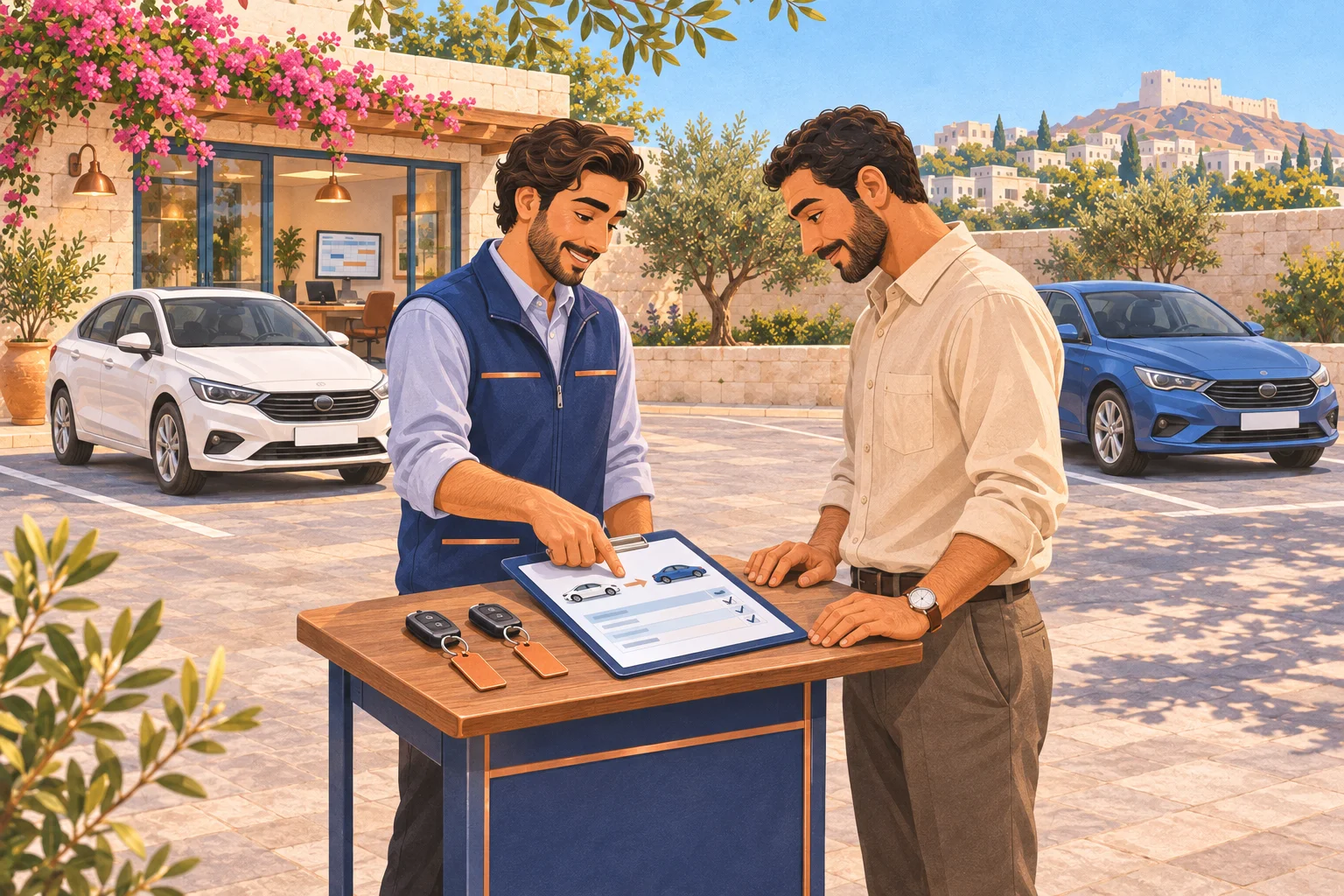
Replacing a vehicle in the middle of a rental may seem like a simple key swap, but it shifts the operation to a vehicle with a different location, odometer, fuel level, and other bookings. If the vehicle name is changed in the record without documenting the moment of transition, reviewing mileage, damage, or toll fees becomes more difficult. Treat the replacement as closing one segment and starting a new one within the rental journey.
Start with a clear reason and a deliverable replacement
Document the reason for the change without unconfirmed conclusions. Review the availability of the replacement vehicle during the required period, its location, readiness, and actual delivery time. It is not enough for it to appear in the fleet if it requires maintenance, transport, or is tied to another commitment. If the reason is technical, prioritize the safety of the customer and the vehicle and request the appropriate action from specialists.
Review the terms of the change before handing over the keys
Determine who approved the replacement and what was agreed upon regarding the category, price, extras, mileage, and security deposit. The price may remain the same or require an approved adjustment depending on the case; do not assume a single rule. Inform the customer of what will happen and document the required approval within the company's procedures. Do not let a general note be a substitute for recording the change in its correct place.
Close the first vehicle's segment
Record the time of receiving the first vehicle from the customer, its odometer, fuel, condition inspection, and location. Collect the keys and relevant accessories, and distinguish what was transferred to the replacement and what remained. If the first vehicle requires technical work or preparation, determine its operational status and who is responsible for it before it returns to availability decisions.
| Vehicle replacement during rental Simplified illustration | ||
|---|---|---|
| Review | Previous vehicle | Replacement vehicle |
| Vehicle | ||
| Replacement time | ||
| Odometer | ||
| Fuel | ||
| Inspection | ||
| Document the replacement within the rental context | ||
| Organize vehicle replacement data and check-out/check-in readings within Fleetraly, and review terms before approving the operation. | ||
| Create your account See how it works | ||
Open the replacement segment with a new inspection
Record the vehicle, its delivery time, starting odometer reading, fuel, and existing notes. Ensure the customer knows the vehicle they are receiving, and that the relevant documents and data reflect the change. Maintain the history of the first vehicle; do not replace its odometer reading with the replacement's reading as if they belong to the same vehicle.
Example of calculating mileage without mixing
The first vehicle went out at 30000 km and returned at 30240 km; its segment is 240 km. The replacement went out at 81000 km and returned at 81310 km; its segment is 310 km. The total of the two segments is 550 km in this example. Subtracting 30000 from 81310 gives a meaningless number for this trip. Any comparison with the allowed mileage requires reviewing the booking terms and the approved change.
Review the impact on the rest of the operations
- Is the possession time for each vehicle clear for reviewing toll fees?
- Were previous damages separated from new notes in each inspection?
- Were the approved adjustments reflected in the relevant amounts and payments?
- Is the location of the first vehicle, its status, and who is following up on it known?
- Did the update reach the employee who will follow up on the final return?
In Fleetraly, there is a path for vehicle replacement within rental management. Review its summary before confirming, and keep a record that explains what was transferred and what changed. A completed replacement allows for tracking each vehicle separately, while still understanding the booking as a single process with a clear history.